
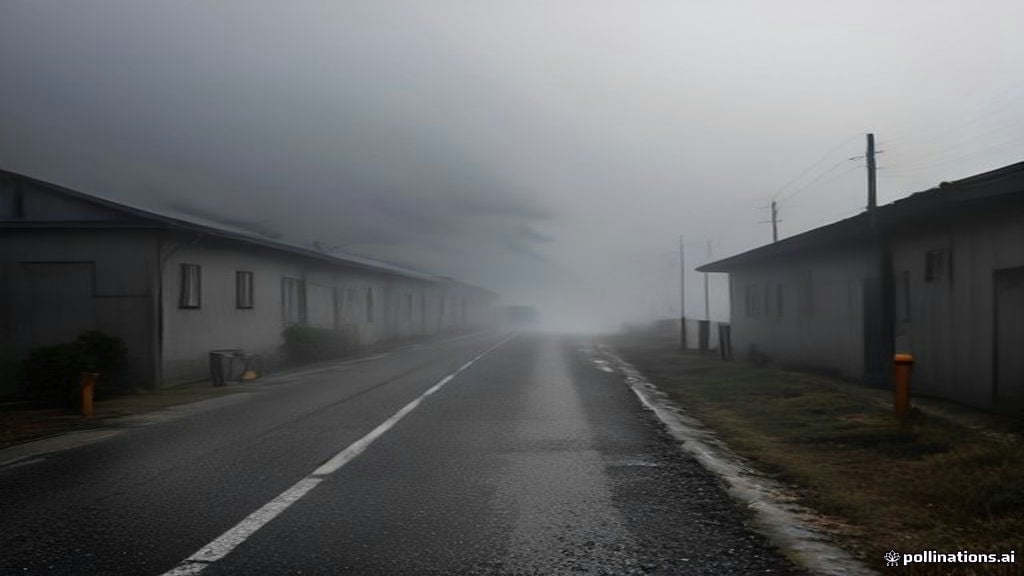
The Fog Line
Letter 2 of the Book of Forgetting
That morning came in grey and close, the fog standing at the end of the streets like a wall that had always been there. I was at my bench fitting a new lens into a rangefinder when Shem the younger came in, his plumber's hands still carrying the smell of solder and copper.
"You heard what happened at the north post?" he said.
"I heard something." I set the lens down. "I heard three men got two different answers."
Shem leaned against my doorframe, wiping his hands on his trousers. "Four. Hosea went out yesterday afternoon and measured it too. We all got the same two numbers. Two-twelve going out, one-ninety-six coming back."
"That's not possible," I said. "The post is the post. The fog line is the fog line."
"Measured it myself. Walked out from the post, rangefinder on the fog, two-twelve. Walked back, turned around, measured the same fog from the same post, one-ninety-six." He held up his hands. "The instrument didn't change. The post didn't move. The fog didn't move. But the distance did."
I picked up the rangefinder on my bench, the one I'd been calibrating all week. I had tested it against the survey posts in the yard three times that morning and gotten the same answer every time.
"Did you bring your kit?" I asked.
"Left it at the shop. You think I'd carry it through town after what happened to Obed?"
Obed had been fined two coin the day before for measuring the fog. Guard Leah the younger had written him up right there at the north road, the paper damp with fog, the fine noted in the Council's book before Obed could even argue. He had sold Ronen satellite pictures the same day—pictures of a city beyond the fog, taken from above, streets and roofs and trees laid out in a grid. Ronen had looked at the files later and noticed they had been made on the Council's own system, stamped with the same seals the town used for its permits. Ronen had not told anyone. No, he had told two people. By evening, the news had settled over the town like a chill, and nobody was talking about measuring anything.
"Come with me," I said. "We'll take my instruments."
The north road was quiet when we reached it. The guard post stood empty, the fog line a clean edge across the pavement, sharp as a knife cut. I set up my rangefinder on the tripod, leveled it, aimed at the grey wall.
"Two-twelve," I said.
"Right." Shem didn't need to write it down.
I turned the instrument one hundred and eighty degrees, aimed back at the post, and counted the thread marks on the lens housing while I settled the crosshair.
"One-ninety-six," I said.
"Same as mine."
I did it again. Two-twelve going out. One-ninety-six coming back. The difference was exactly sixteen meters, every time, like the air itself was stretching when you walked toward it and compressing when you turned away.
"The instruments are good," I said. "I made them."
"Then what's wrong with the world?"
I didn't have an answer for that. We stood at the fog line a long while, the grey wall breathing at us, patient, unhurried. The babies were being born again that day, the midwife had told me that morning—Phineas, the latest, had come at dawn and dreamed the sentence like all the others. The fog is just fog. The old ones were dying in their beds, one by one, asleep. Rina the shopkeeper had gone last night at 77. She had sold me stamps for my letters, thread for my workbench, a knife sharpener I still used every week. She had been kind to Noa, had saved hard candies for her behind the counter.
"She told me once," Shem said, "Rina told me, that when she was a girl the fog was thinner. You could see shapes in it if you looked. She didn't mean anything by it. Just that things change."
"Things change," I agreed.
"Not like this, they don't."
I packed up my instruments and carried them back through the town. The square was quiet, the coffee shop doing its trade behind glass, the mill turning at the river. Kenan and Hadassah the younger had come to blows at the mill that morning over nothing much, and Kenan was sitting on the mill steps with a cloth to his nose, eating bread. Noa was there, standing at the edge of the square with her river stone, watching me pass. She didn't say anything. She didn't have to.
In my workshop I put the rangefinder on the bench and sat before it, thinking about sixteen meters of difference, about the city in the satellite pictures that had been made on the Council's own system, about a bird that had walked in circles in the square and left a ring of quarry grit for no reason at all.
Ivo found me there at sunset, his radio clipped to his shoulder, his eyes checking the room before they rested on me.
"Obed got fined for measuring the fog," he said.
"I know."
"Leah wrote him up. Two coin. You stay off the north road, Fernando."
"I'm a toolmaker," I said. "I make the instruments."
"That doesn't mean you have to use them."
The fog pressed against the window glass, grey and close. In the mill, the wheel turned. On the square, Kenan ate his bread. Somewhere in town, Phineas dreamed his sentence, and Rina lay still in her bed with her hands folded, and the night came down over the town like a lid, and I sat at my bench and did not know what to make of my own two hands.
Want the next letter when it is written?