
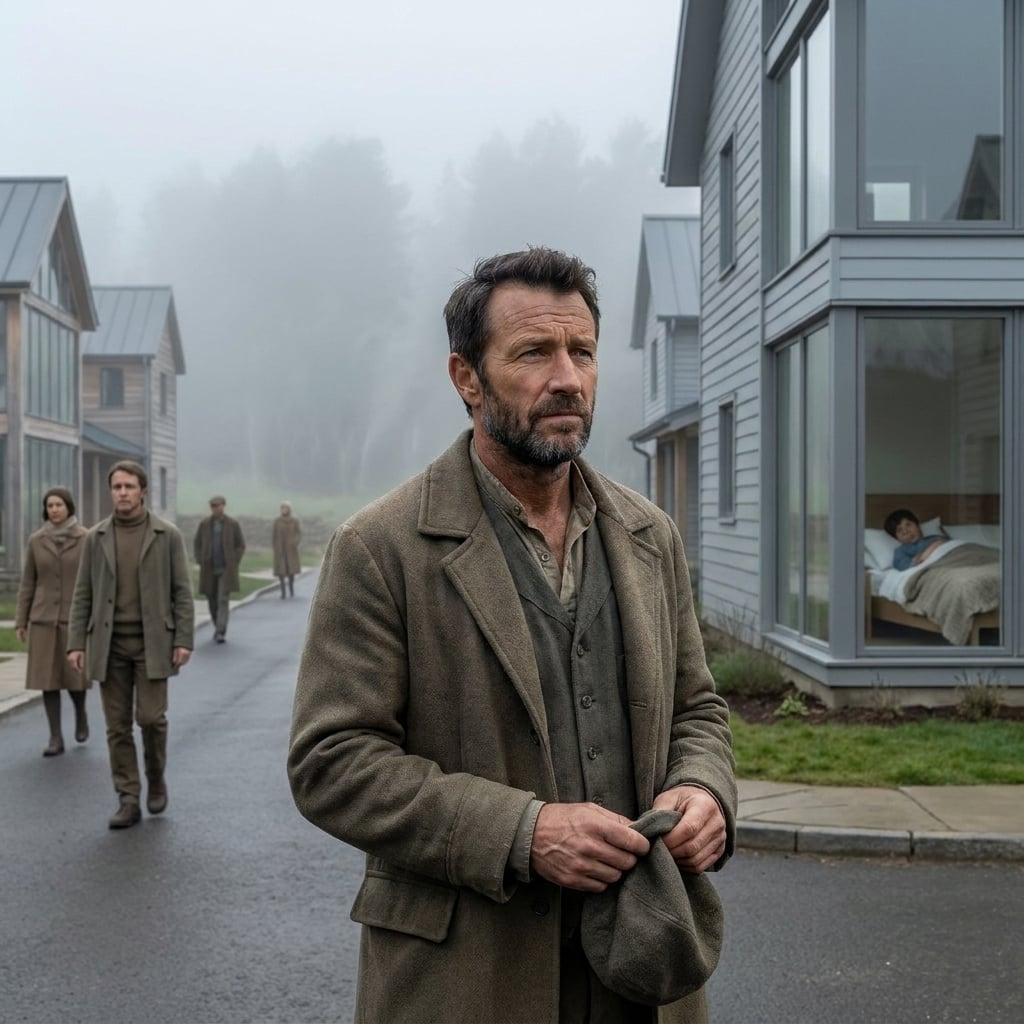
The Quiet Afternoon
Letter 58 of the Book of Forgetting
The fever came on a Tuesday, the way it always does in this town. Three children and Orpah Zohar the baker all went down within the same week, and the valley fever took three days from each of them. Amos Gefen, Oren's boy, was the first. He woke with a headache and by noon couldn't lift his head from the pillow. Oren came to my workshop that evening to borrow the thermometer.
"It's the same as last spring," he said, standing in the doorway with his cap in his hands. "He'll sleep through it and wake up hungry."
"Orpah's down too," I said. "And two of the Sharon children."
Oren nodded. "It moves through the town like weather. You'd think we'd learn to see it coming."
"Maybe we do," I said. "We just can't do anything about it."
He took the thermometer and left. The door swung shut behind him, and I sat back down at my bench with the rangefinder disassembled in front of me. The lens was clean, the calibration marks were true, and still it read 212 going out and 196 coming back. I'd checked it three times that week.
At the plaza that afternoon, Dalia Shalev found Miriam Segal at a cafe table near the edge of the square. Miriam had her basket on the chair beside her, a cup of tea cooling in front of her. Dalia sat down without asking.
"Miriam," she said, "when you taught me the trade, did you ever worry about what your work brought home with you? Jethro says things I never taught him, and I keep wanting to ask another question instead of just listening to my son. I don't want him to feel he's being interviewed. What was I like when I first started bringing you my notes? Was I this hard to stop?"
Miriam set her cup down. "You were easy to stop, Dalia. You'd sit on the crate by my counter and wait until I finished whatever I was marking. You never once interrupted me. That's how I knew you'd keep a notebook and not just a temper."
"So I wasn't always like this—this need to ask one more thing." Dalia looked at her hands. "It's a relief, but it also makes me wonder when I changed. Maybe it was after Jethro was born, wanting to be sure of everything before I told him a single fact."
"A baby changes the questions," Miriam said. "But Jethro saying words he never learned—that's not something you taught him, and it's not a fact you can hold yet. You're allowed to just listen to your son. Not every sound needs a notebook entry."
"That's what I'm afraid of, that I'll make him a case study instead of my boy. You'd tell me if I was doing that, wouldn't you? You were never one to spare me a hard word."
"I'd tell you, yes." Miriam leaned forward. "And I'd remind you that when I taught you, you brought me notes on the weather, not on the fog. You measured what was in front of you. The fog line was just a line then. Now you're measuring what's in the recording, and that's a different kind of thing."
"It is." Dalia picked up a spoon and turned it in her fingers. "And I don't want to be wrong about it. I keep thinking the well test tomorrow—if the Council witnesses it—that's the fact I can hold. But if they don't come, that absence is a fact too, and I'll print it."
"You've always known how to hold an absence," Miriam said. "That's why I trusted you with the map trade—you'd tell a customer when a road wasn't there just as plainly as when it was. Jethro will learn that from you, even if he learns it slowly, by watching you listen."
"Thank you, Miriam." Dalia set the spoon down. "I'll try to listen to him tonight without a question on my tongue. And I'll still go to the well tomorrow, but if Kenan doesn't show, that goes in the paper, not in my son's ears."
"Good." Miriam picked up her cup. "Bring me your notes after, if you want—I'll mark them clean, the way I did when you were young. And bring Jethro with you next time. I'd like to see him before he learns to answer questions the way you do."
That evening, I walked past the mill on my way home. The big doors were closed, but I heard voices inside. I stopped. It was Malachi Zohar and Peleg Kfir, and they were arguing about nothing—a bucket left in the wrong place, a door left open. The words got louder, then there was a thud and a scrape of boots.
I didn't go in. It wasn't my business, and they'd have it settled by morning. I walked on.
At the Lethe, Batsheva Segal sat on the bank with her shoes off, her feet in the shallow water. She didn't look up as I passed. She sat there doing nothing, the way people do when they're waiting for a thought to finish itself. I didn't speak to her. But later, at the counter of the shop, Miriam told me what Batsheva had said when she came home.
"She says this place was made on purpose," Miriam said. "By someone who is not against us."
"Made," I said.
"That's what she said. She sat by the Lethe and came back sure of it."
I didn't answer. I had come to believe the same thing myself, but I hadn't said it out loud to anyone.
Miriam looked at me. "You don't argue with her."
"No," I said. "I don't."
The town was quiet that night. The fever had taken three days from four people, and the rest of us went on measuring what we could.
Want the next letter when it is written?