
A person of Neshiyah
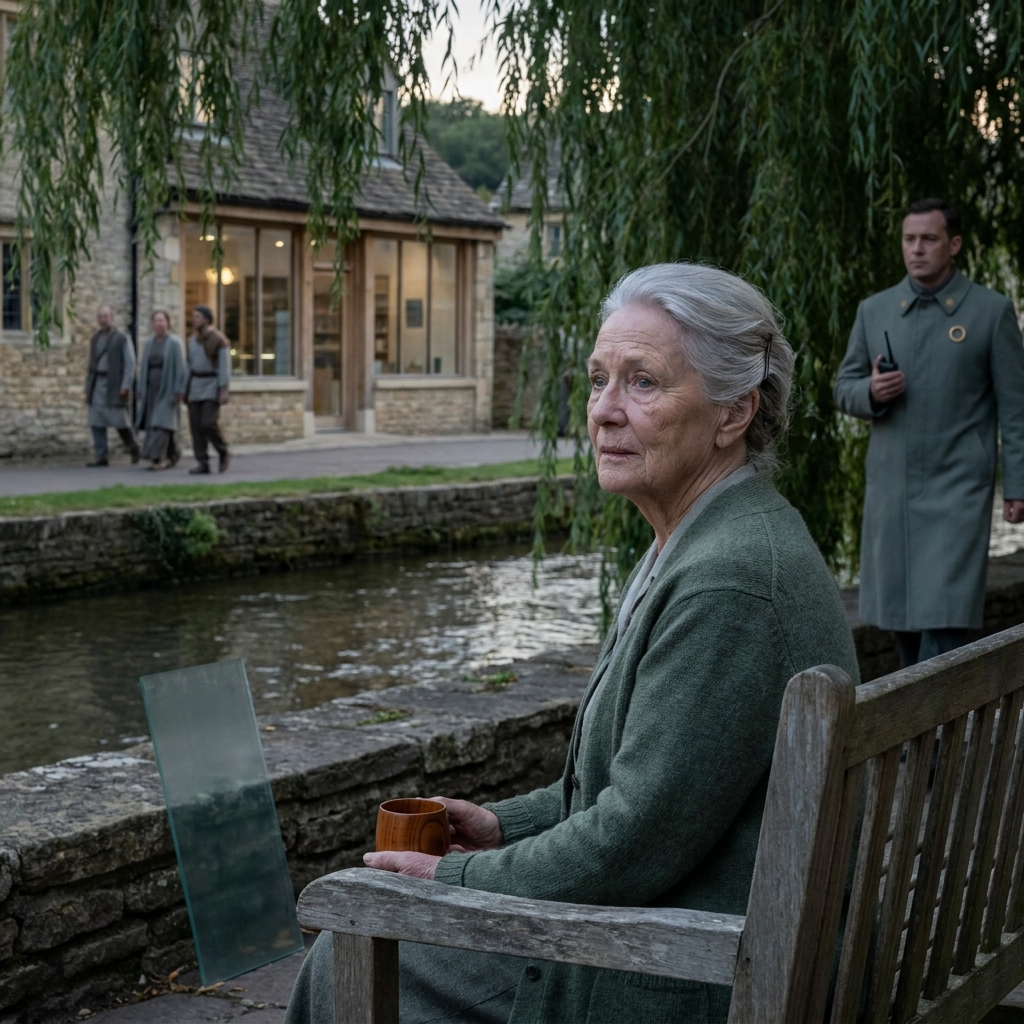
Hadas Levin, retired, once ran the mill
The Miller's Widow
Hadas Levin
Retired, once ran the mill, about 85 years old. Born in Neshiyah, like everyone.
Hadas Levin, at eighty-four, is a small, sharp-eyed woman whose silver hair is pinned back with the same finality she once used to close the mill’s ledgers. She wears a muted green cardigan, soft from years of washing, and sits by the Lethe under the willows at dusk, hands folded, as if listening to the water’s slow arithmetic. Curious only when something is set before her—a stone, a stopwatch, a neighbor’s claim—she trusts with reason and rarely angers. Her habit is to time things: drops, splashes, silences. Though the town calls her The Miller’s Widow, they see her as a fixture, someone who remembers more than she says but keeps the fields’ faith. She wants only to compare one falling thing to another, and to be left alone with the fog’s edge.
Noa's phone and my stopwatch might tell different stories; I need to see if the delay is in my hands or in the place.
The delay is real for me and for most, but Joel and Oren saw nothing odd—maybe the difference is who stands where, not the well itself.
I keep thinking the well delay and the rangefinder difference might be the same kind of thing, and I want to see it with my own hands.
I've been thinking about that rangefinder difference and the well delay—maybe they're the same kind of thing, and I'd like to see it for myself.
Asked: Hadas, you've been back from the fever for a few weeks now. How's the mill treating you?
Hadas: The mill's fine. It runs itself mostly, and I just keep an eye on the gears. The fever took three days out of me, and I still feel like I'm catching up on sleep.
Asked: I heard you and Hannah had a bit of a row down there. What was that about?
Hadas: Honestly, I can't say it was about anything real. She thought I'd left a sack of grain out to spoil, and I thought she'd moved my tools. We shouted, and then we both went quiet and fixed the fence. It happens.
Read the rest
Asked: You've also been spending time by the river, just sitting. What do you do out there?
Hadas: Nothing. I watch the water and the fog on the far side. Last week I sat there so long I forgot my own name for a bit, and when I came back, I had this feeling—like the whole town was built on purpose, and whoever did it doesn't mean us harm.
Asked: That's a strong feeling. Do you think it's true, or just the quiet talking?
Hadas: I don't know. I'm not sure it matters. The fields need working whether it's true or not, and the mill needs oil. But I can't shake that it's not an accident, and that's a question I can't answer—why would someone make a place like this and then leave us alone in it?
Asked: You mentioned the fog. Have you ever tried walking into it?
Hadas: Once, a few weeks back. I went down the east road, just to see how close I could get. A guard stopped me at the line, real polite, told me the Council prefers people to stay at their work. I turned around, and my boots were wet, like I'd stepped in a puddle that wasn't there.
Asked: Wet boots from dry ground—that's odd. Did it bother you?
Hadas: It made me think. I've lived here eighty years, and the fog's always been there. But that wetness, it felt like the fog was reminding me of something, or testing me. I don't know which. I haven't gone back since.
Asked: You said you and Gilead also had a fight at the mill. Was that like the one with Hannah?
Hadas: Similar. He said I was letting the sluice gate rust, and I said he'd been shorting me on flour deliveries. We pushed a wheelbarrow back and forth for a minute, then he laughed and I laughed. It's nothing. People here get angry when they're tired, not when they mean it.
Asked: So after all that—the fever, the fights, the fog—what keeps you going day to day?
Hadas: The work, mostly. And the river. I like that it doesn't ask me anything. But I'll tell you, I keep thinking about that purpose I felt. If this place was made, then maybe the fog is part of it too, and I'd like to know what it's for. I just don't know how to ask.
Asked: If you could ask it, what would you say?
Hadas: I'd say, 'Are you the edge, or are you the door?' And then I'd wait. But the fog doesn't answer, and neither does anyone else. So I go back to the mill, and I oil the gears, and I watch the river. That's enough for now.
Temperament
Curious when something is in front of them; trusting, within reason; hard to anger; happiest alone; given to sitting by the river.
What people say
People say Hadas Levin has started asking questions about the fog that the Council would rather not hear.
What the record shows
- day 45 Hadas Levin, the retired, once ran the mill, died at 85, of old age. In their last days people said they were still measuring. The town has lost its the miller's widow.
- day 44 Hadas Levin confronts Noa Hadar at the old well about whether the splash delay is personal or tied to the place, and Noa proposes a test to settle it by having Hadas use her phone and stopwatch together.
- day 44 Hadas Levin decided to find Noa Hadar: Noa, I timed the splash again at the well and it came back a full second late, but Joel and Oren got nothing unusual. Did you ever test it yourself, or did you only hear it from others? I want to know if the delay follows the person or the place.
- day 44 Hadas Levin went to the old well at the south edge to test it: Walk to the old well at the south edge with my mechanical stopwatch and a small stone. Drop the stone and time the splash three times, then drop a smaller pebble twice. Write down all times and compare them to Noa's reported phone reading. A guard turned them back at the fog line before they could finish.
- day 44 Hadas Levin went to the old well at the south edge to test it: Walk to the old well at the south edge with my own mechanical stopwatch and a small stone. Drop the stone and time the splash three times, then drop a smaller pebble twice. Write down all times and compare them to Noa's reported phone reading. The splash came back late again, by a full second on the timer.
- day 43 Hadas Levin decided to go to the old well at the south edge: Walk to the old well at the south edge with my mechanical stopwatch and a small stone. Drop the stone and time the splash three times, then drop a smaller pebble twice. Write down all times and compare them to Noa's reported phone reading.
- day 43 Hadas Levin decided to go to the old well at the south edge: Walk to the old well at the south edge with my own mechanical stopwatch and a small stone. Drop the stone and time the splash three times, then drop a smaller pebble twice. Write down all times and compare them to Noa's reported phone reading.
- day 38 Hadas Levin the retired, once ran the mill fell ill with the valley fever and lost three days to it.
- day 37 Hadas Levin and Hannah Gefen came to blows at the mill over nothing much.
- day 34 Hadas Levin sat by the Lethe doing nothing and came back quietly sure that this place was made on purpose by someone who is not against us.
- day 29 Hadas the retired, once ran the mill fell ill with the valley fever and lost three days to it.
- day 24 A guard at the end of the east road turned Hadas back at the fog line with a reminder that the Council prefers people to stay at their work.
- day 18 Gilead and Hadas came to blows at the mill over nothing much.
- day 17 A guard on the east path sent Hadas home with wet boots and a reminder that the Council prefers people to mind their trade.
Hadas Levin died on day 45.
People on this page
 Noa Hadar
 Hannah Gefen