
The Two Letters
Letter 68 of the Book of Forgetting
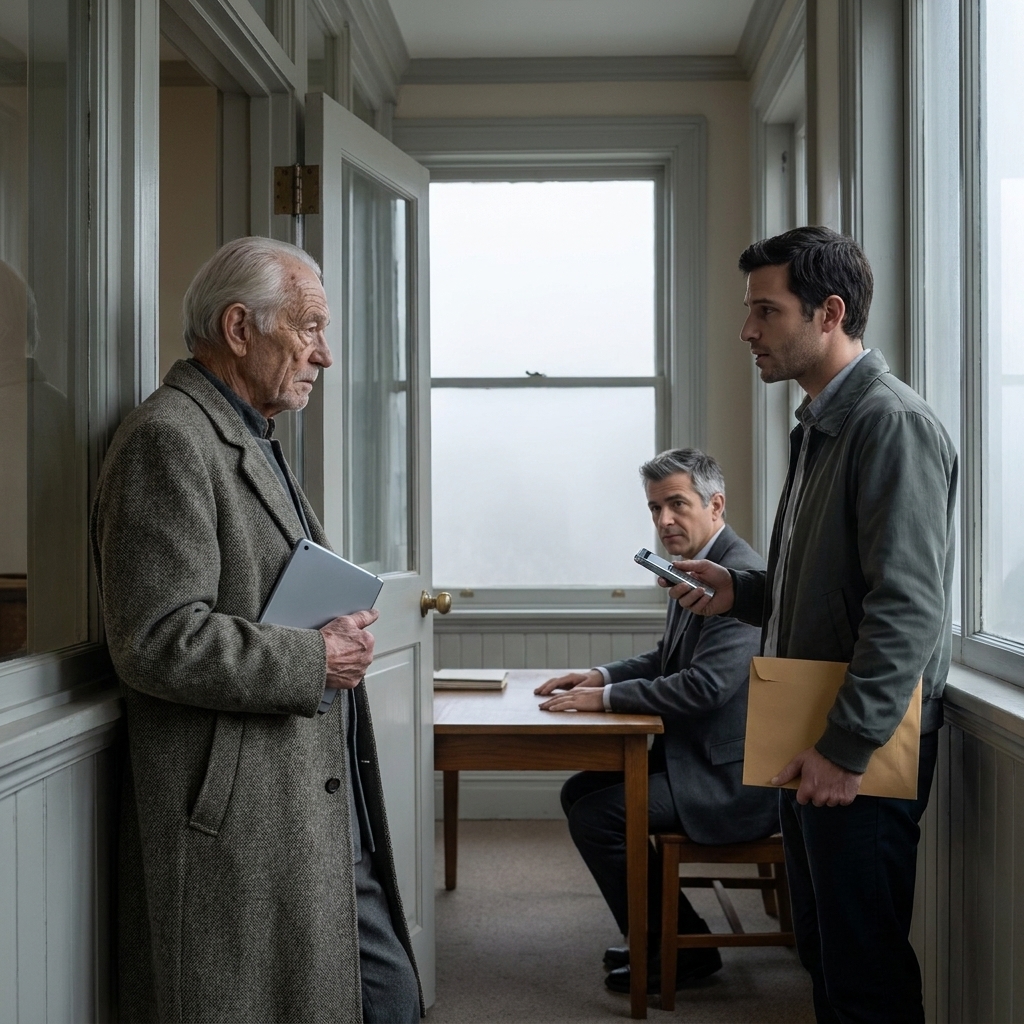
At the town hall, the corridor smelled of floor oil and the particular dust that gathers in government corners. Obed Nir stood at Kenan Ofer's open door with a recording device in one hand and an envelope in the other. Garrin Zohar leaned against the wall opposite, tablet against his chest, watching.
Kenan Ofer sat at the Council table with his hands flat on the wood. He was a compact man, grey at the temples, with the patient stillness of someone who has learned not to move first.
"I've brought the recording from the old well," Obed said, "and this loan letter dated the seventh that arrived on the fifth. I need you to explain the full-second mismatch and the date before I take it further."
Kenan did not look at the recording device or the envelope. "The well is a Council matter. The letter is an Exchange matter."
"The letter came before it was written," Obed said. "That's not a banking matter, that's a fact. And my timer and the recorder both say one point seven, but Noa's ear says one point two. Which one is true?"
Garrin spoke from the wall. "If I may, Kenan, the discrepancy is logged. We have three different numbers for the same drop. The Council's rule on instruments doesn't explain that."
Kenan's hands did not move. "The rule says instruments may disagree. It doesn't say the Council must explain why."
"I'm not asking for permission," Obed said. "I'm asking for an explanation. The letter is dated the seventh. It arrived on the fifth. That's not a matter of opinion."
"Then take it to the Exchange," Kenan said. "Uriel can tell you how a letter gets postdated."
Garrin wrote on his tablet. "I'll record that you declined to explain. The refusal is noted, as before."
Kenan looked at him then, a long flat look. "As before," he said. "Yes."
Obed turned and walked out. Garrin followed, and in the corridor they found Miriam Segal coming the other way, her basket over her arm, her face tight.
"Oren's in the back office," she said to Garrin. "I need to speak with him before I lose my nerve."
Oren Gefen stood at his window in the back office, looking out at the plaza. Miriam shut the door behind her.
"Oren, I know the loan terms are set by the Council, but I saw Ezra writing in a separate book at the window last week. If I told the Council about that, would it help me get an extension?"
Oren turned. His face was patient but tired. "Miriam, you don't want to go down that road. Ezra's book—if it exists—is Exchange business, not yours. The Council won't thank you for poking at their ledger."
"But I need coin before Friday, and the schedule won't bend. If the Council hears he's keeping a second record, maybe they'll look at my case differently."
"I've seen the Council make examples of people who stir things up. You'd be trading a loan problem for a bigger one. What do you actually have to offer as collateral?"
"I've got the map stock, but it's not worth much to the Exchange. They want real property, not paper."
Oren leaned on the windowsill. "I can vouch for you with Uriel, say you're good for it. That might carry more weight than any second book."
"You'd do that? Even after I came at you with the Ezra thing?"
"You're in a tight spot, and you're not the first. I'll talk to Uriel today, see if he'll take my word on the collateral. But leave Ezra alone—that's my advice."
"I hear you. But if Uriel says no, I'm still stuck. The book might be the only thing that moves the Council."
"Then we'll cross that when we come to it. For now, let me try the honest way first."
Miriam nodded, but her hands stayed tight on the basket.
At the north road survey post that afternoon, the fog held its line. Garrin and Dalia Shalev stood with the noon guard, a young man named Joel Nir who held his rifle across his chest like a broom handle.
"Dalia, thanks for coming," Garrin said. "I need the guard's own words. Can we ask him straight?"
"Yes," Dalia said. "I want his account too, so I can print something fair. Let's do it."
Garrin turned to Joel. "So you didn't have a written order? Just the standing rule?"
Joel looked at the fog. "Just the rule. Council prefers people at their work."
"And you turned me back because of that rule," Dalia said, "even though I wasn't near the line?"
"You were walking toward it. That's near enough."
Garrin wrote on his tablet. "That's what I needed. I'll log it. Thank you."
"So it's just the rule," Dalia said. "No special order about me. That's what I'll write."
"And I'll close the file with your account and his," Garrin said. "Clean numbers."
Joel nodded once and looked back at the fog. The three of them stood there a moment, the line of white hanging motionless at the road's end, and none of them said what they were thinking.
Want the next letter when it is written?